
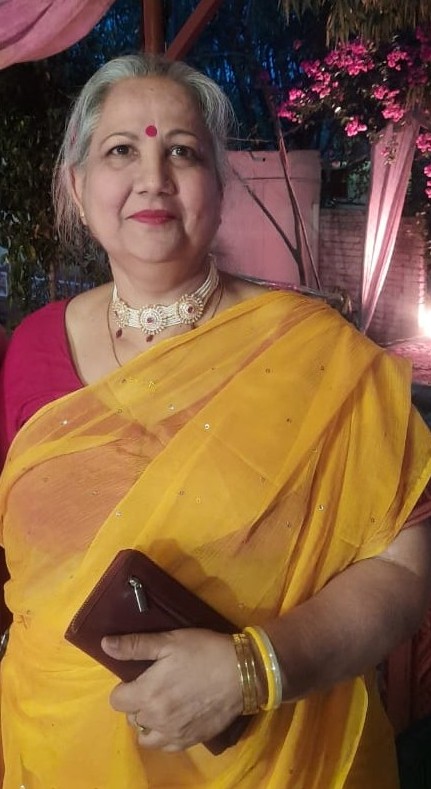
What’s your mother’s favorite food?
You should be able to answer that in under thirty seconds—without pausing, without second-guessing yourself, without mentally flipping through a list of dishes she’s made for you over the years.
And yet, many of us can’t.
That small, awkward pause says more than we think.
Every year, Mother’s Day arrives wrapped in ready-made sentiment—cards, flowers, neatly packaged gratitude that feels heartfelt but strangely rehearsed. It’s a polished ritual. But somewhere in all this performance, something basic gets lost.
We celebrate mothers as symbols, not as people.
We place them on a pedestal—“selfless,” “sacrificing,” “always giving”—until their individuality begins to blur. They become defined by what they do for us, not by what they quietly enjoy when no one is watching.
So the question returns.
What’s your mother’s favorite food?
Not what she cooks best.
Not what she serves everyone else, day after day.
What does she choose when the choice is entirely hers?
My mother, Jaya, cooks elaborate Indian meals. Her besan ki mirchi, achars, mutton curry, and biryani are what people know her for. She works tirelessly in the kitchen, usually eating last herself.
For years, she never really said what she liked.
Then I began to notice what genuinely lights her up: a McDonald’s spicy chicken burger—with extra cheese—fries on the side, and a Thums Up (not Coke).
That’s it.
The woman known for slow-cooked gravies and carefully layered biryanis loves the simplicity of a quick, indulgent meal she didn’t have to make, didn’t have to plan, didn’t have to think about. No effort. No responsibility. Just the quiet pleasure of being served for once.
And somehow, that realization stayed with me.
Because it changed how I saw her.
Not just as someone who feeds everyone else, but as someone who also wants to be fed.
And then I came across something called microchimerism.
During pregnancy, a baby’s cells don’t just pass through the mother—they stay. Scientists have found that fetal cells travel into her bloodstream, settle in different organs, and can remain there for years, even decades.
Which means, quite literally, a part of you is still inside her.
Not metaphorically. Not poetically. Biologically.
We like to say, “I am a part of my mother.”
Science, it turns out, is far less sentimental and far more literal: you never really left.
And somehow, that biological fact makes the earlier question feel more difficult to ignore.
Because if parts of you have been living inside her all this time, how is it that you don’t know something as basic as what she feels like eating on a random Tuesday?
It’s a strange imbalance.
She carries pieces of you in her body.
And for the longest time, I didn’t even know that Jaya—who can orchestrate a feast without blinking—just wants a messy, over-cheesed burger and a cold Thums Up when no one needs anything from her.
This isn’t really about food.
It’s about attention.
Have you ever really noticed what she orders when someone else is cooking? What she lingers over on a menu, even if she doesn’t say it out loud?
Over time, many mothers become so associated with caregiving that their own preferences begin fading quietly into the background.
And then we try to compensate—with gifts, with gestures, with visible declarations of love. But appreciation without understanding is thin, almost hollow.
What if we asked better questions?
Does she like her tea strong or mild?
Does she reach for sweet or savory when given the choice?
What dish reminds her of her own childhood, before she became responsible for everyone else?
When was the last time she ate something just because she wanted to?
These questions seem small, almost trivial. But they ask her to exist beyond the role she performs for everyone else.
Mothers are not naturally selfless. They’ve simply been expected to be. Their desires aren’t absent—they’ve just been postponed, over and over again.
To truly see your mother is not to elevate her endlessly, but to meet her at eye level—to notice the details, the quiet joys that make her who she is.
So this year, before you reach for the card, before you settle on a safe, predictable gift, pause for a moment.
Ask her what she wants to eat. Not casually. Not out of obligation. Ask like the answer might tell you something new about her. Because it will. And if you don’t know the answer yet, that’s okay. Just start paying attention—you might be more surprised than you expect.

