
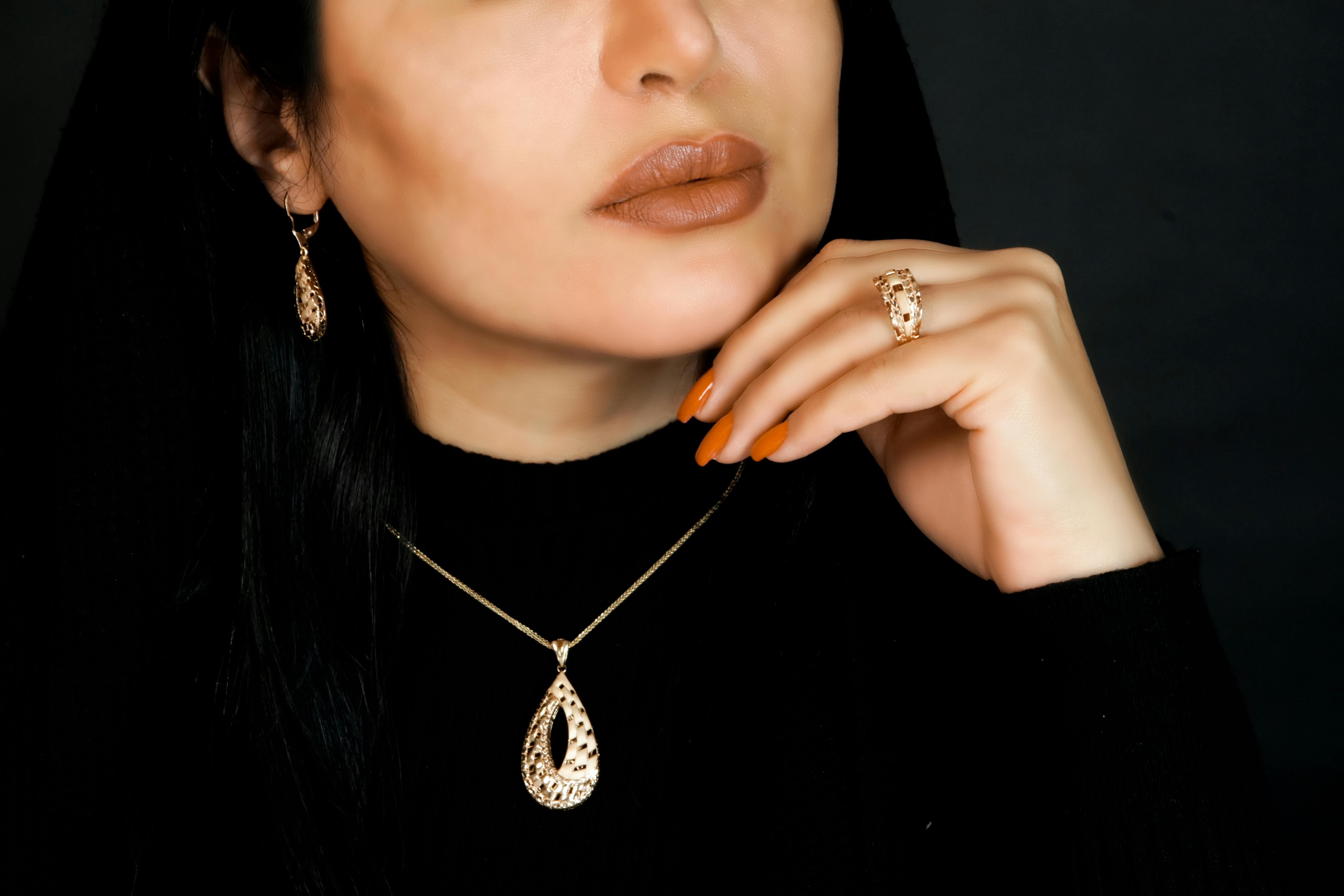
I thought jewellery was a matter of personal taste. Then I asked people around the world what they actually wear.
It began with a question that felt almost trivial: what do people outside the US wear every day when it comes to jewellery? Not for weddings or celebrations, but in ordinary life—a chain, a ring, a pair of earrings; gold, diamonds, gemstones, or nothing at all.
I posted it on a jewellery forum on Reddit, a space that leans heavily American. What gets admired there follows a familiar visual language: visible diamonds, layered pieces, and a certain ease with display. I wanted to see what sat outside it.
I wasn’t expecting much. Certainly not hundreds of responses from people across continents, explaining not just what they wore, but why.
The replies came quickly, and then kept coming. Within a short time, the post had crossed 120,000 views and drawn hundreds of comments. I found myself going back to them again and again, overwhelmed, and a little obsessed with how much people had to say.
This wasn’t structured research. There was no methodology, no attempt at representation—just people, from different places, describing what they wear and how they think about it. And yet, something began to repeat. Large diamonds weren’t common in some places. Heavy jewellery felt impractical. Certain things were described, almost instinctively, as “too much.”
At first, this read like individual preference. But the repetition suggested something else. People weren’t just describing what they liked. They were explaining where the line was.
The Chain Around My Neck
I will be honest: the responses prompted a kind of self-reflection. Even something as small as the chain around my neck began to feel less obvious. The gold, the weight, the length. As an Indian woman, I wear 22-carat gold without thinking. It is simply what most jewellery looks like where I live. Anything less yellow is often questioned. Only recently has India started opening up to lower-carat pieces—and with current gold prices, even 9-carat gold is entering households, albeit not as openly as they might elsewhere in the world.
What feels natural, it turns out, is often just what is familiar. That realization changed how I read everything that followed. I have made an effort to summarise the responses I received by region.
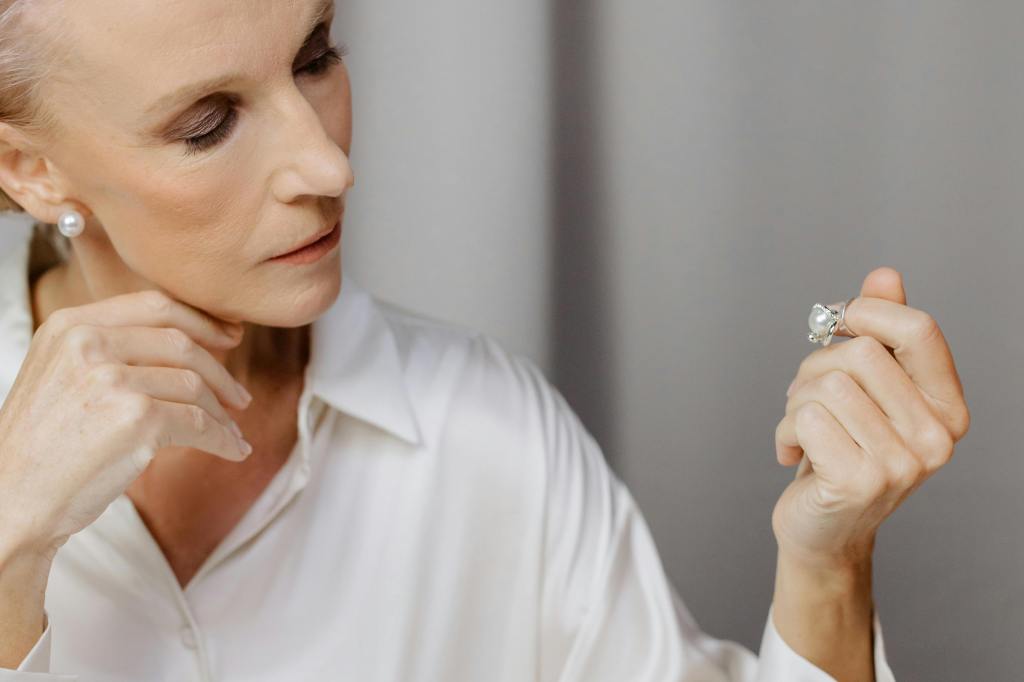
Europe: Craft, Restraint, and Variation
In Germany, several people describe larger stones as unnecessary, even slightly embarrassing. Flaunting wealth is often seen as gaudy, and everyday jewellery remains minimal, with engagement rings themselves not always a given.
Elsewhere in Europe, the distinctions become more layered. In France, jewellery is understated, almost invisible. In Italy, craftsmanship matters as much as material, though economic shifts and safety concerns have changed how much is worn daily; in the south, more elaborate, almost sculptural pieces still appear. In parts of Eastern Europe, jewellery is often something you are given rather than something you choose, pieces that stay not because they stand out, but because they mean something.
In Greece, Spain, and Russia, small religious pieces are worn consistently—a cross, a medallion, a pendant—sometimes visible, sometimes not. In Spain, pearl earrings appear far more frequently than large diamonds. In the United Kingdom, the picture is less consistent: some describe simplicity, while others layer and stack freely. At the same time, accessibility plays a role. Nine-carat gold is common, and many people openly admit they choose durability and affordability over purity.
Across much of Europe, large diamonds remain less common, shaped both by higher prices and a cultural emphasis on modesty.
Scandinavia: The Culture of Not Standing Out
Across Scandinavia, restraint is not just a preference; it is a principle. It has a name: Jantelagen—the idea that no one should stand out too much. Jewellery follows that logic, favouring smaller diamonds, simpler bands, and muted styles. In Sweden, Denmark, and Norway, anything beyond discreet earrings and a modest ring can draw attention.
Some trace this sensibility back to centuries of Lutheran influence, where modesty and equality shaped not just belief, but appearance. Even today, the aesthetic persists in neutral clothing, minimal makeup, and jewellery that does not announce itself.
In places like Iceland, that restraint shifts with context. Everyday wear may be minimal, but formal occasions allow for something more visible. And yet, even here, the line is not fixed. Younger buyers are beginning to choose larger stones, and some notice a quiet “Americanisation” in jewellery styles. Stores now carry a wider range of solitaires than they once did, and expectations are slowly changing.
It begins to feel less like people are choosing jewellery, and more like they are choosing how visible they are allowed to be.
East Asia: Fit, Restraint, and Material Precision
In Japan, the logic feels different—less moral, more precise. Jewellery has to fit, not just the person, but the moment. Time, place, and occasion all matter, and everyday wear is small, almost deliberately unobtrusive.
Even the materials follow this logic. Yellow gold is often 18K, while white gold is less common, with platinum or silver preferred instead. Small diamond studs, often set in platinum, are typical. Luxury brands are well known, but not universally owned.
The question is not whether you like it. It is whether it fits.
In Korea, the shift is sharper. Jewellery itself is optional, and trend-driven, non-precious pieces are widely accepted. Wearing something that is not “real” carries little hesitation.
South Asia and the Middle East: Gold, Value, and Continuity
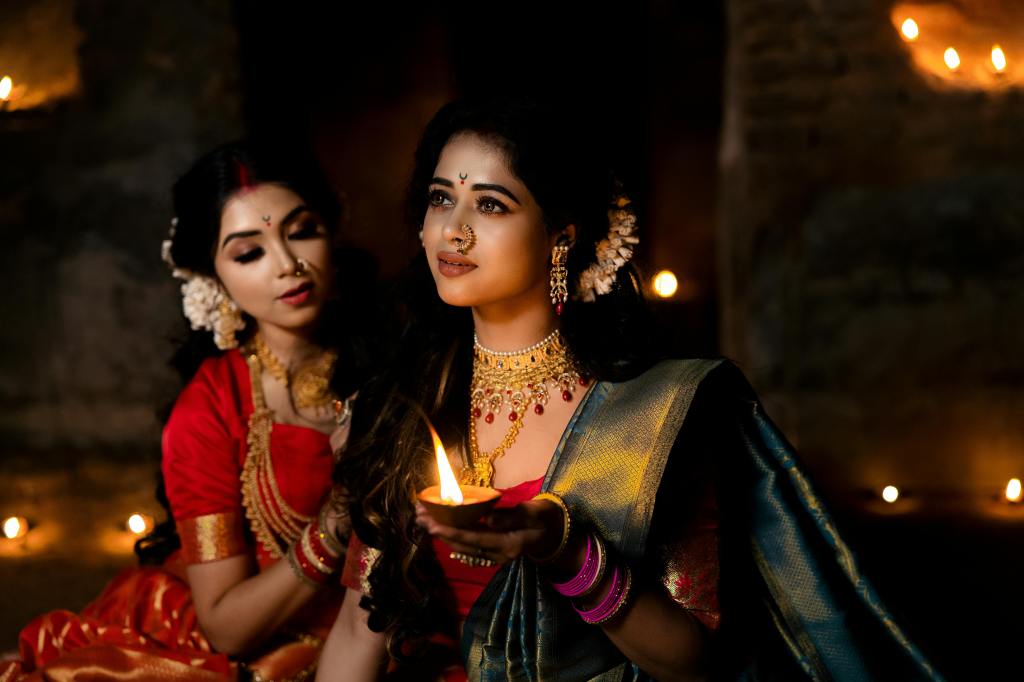
In India, jewellery does not seem to need explanation. It is woven into everyday life. Gold, often 22 karats, is not just something to wear, but something to hold onto. It reflects marriage, region, religion, and economic standing, moving through life—gifted, stored, worn, passed down.
Even those who prefer minimalism still tend to wear something made of gold, because in India, jewellery is not optional; it is deeply embedded in the culture.
A similar thread appears across parts of the Middle East, where jewellery is both adornment and security. Sometimes, it is also deeply personal. One response stood out: an American woman described how marrying into a Pakistani family transformed her relationship with jewellery. Even after separation, her former in-laws continued to gift her intricate, handcrafted pieces. Wearing them daily, she said, changed how she saw herself, allowing her to step into a more confident, expressive version of herself.
Southeast Asia: Diversity Within the Same Country
In Malaysia, even within the same country, the rules shift. Malay and Indian communities often embrace gold and full adornment, treating jewellery as an essential part of daily life—brooches, bangles, rings, layered pieces. Chinese communities tend toward restraint, favouring fewer pieces, simpler forms, and often silver. Indigenous groups draw from entirely different traditions, using beadwork, natural materials, and symbolic design.
What counts as too much is not national. It is social.
Latin America and the Philippines: Jewellery as Memory and Aspiration
In Mexico, jewellery often begins early—baptism crosses, engraved bracelets, pieces that accumulate over time. Jewellery is not just chosen; it is inherited, gifted, and built over the years.
In parts of Latin America and the Caribbean, jewellery can be more visible, though that visibility often depends on context.
In the Philippines, another pattern emerges. Jewellery exists across price points: students wear silver or stainless steel, while working adults mark milestones by buying their first gold piece. There is also a growing gold culture, driven by accessibility and resale markets. People mix real and imitation freely, and stacking is common, partly because others assume the pieces are not valuable.
What matters is not just what something is, but what it represents.
Africa and the Americas: Safety, Climate, and Constraint
In some places, the question is not what looks right, but what feels safe. In parts of Brazil, South Africa, and Ecuador, people describe keeping real jewellery locked away, wearing less valuable pieces outside—not because of preference, but because of risk.
In northern Canada, practicality shapes things differently. Extreme cold, heavy layers, and constant movement make jewellery inconvenient, even dangerous. Metal against skin can freeze, and larger pieces catch on clothing.
What remains are smaller, more adaptable forms—or nothing at all. Here, what people wear sounds less like preference and more like calculation.
Materials and Access: Gold, Cost, and Perception
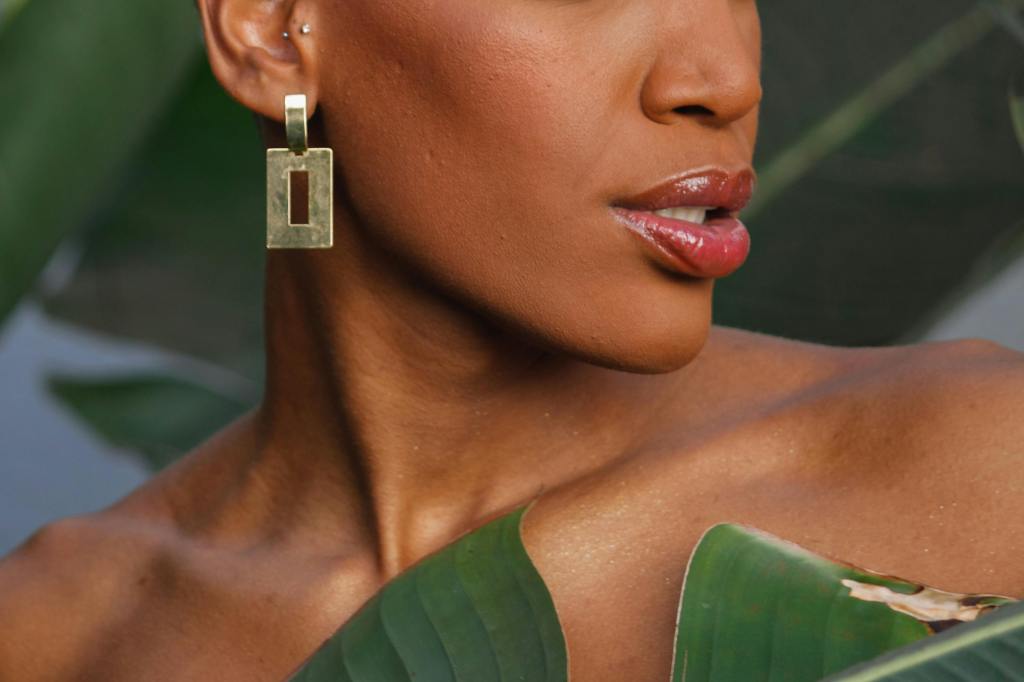
Even the materials themselves begin to tell a story. In the United Kingdom, nine-carat gold is common—not always because people prefer it, but because it is more accessible. In many places, rising gold prices have pushed people toward plated or alternative materials.
In the Philippines and Korea, everyday jewellery often blends precious and non-precious. What something looks like does not always determine how it is understood.
Not everything that looks valuable is treated as such. Over time, these conditions shape more than what people wear; they shape what begins to feel normal.
A Shared Reference Point: Visibility and Influence
Another pattern took longer to come into focus. Many responses were not simply descriptions of local habits, but comparisons—often implicit, sometimes explicit. Large engagement rings, stacked jewellery, and more visible displays of wealth appeared again and again as points of reference. People were not only describing what they wore, but also how it differed from something else.
That “something” was often American, even when it wasn’t named as such: not just a country, but a way of wearing that had become globally legible. Even in places defined by restraint or practicality, these comparisons surfaced, suggesting a shared awareness of a more visible, more maximalist aesthetic. It wasn’t universal, but it was familiar enough to shape how people explained themselves.
Jewellery and the Calibration of Taste
By the end, what became harder to ignore was not the variation, but the structure underneath it. Despite the lack of structure in how these responses were gathered, something consistent still emerges. Across places and contexts, people are doing something remarkably similar: they are locating themselves.
Not just choosing what to wear, but placing that choice somewhere—within expectations, constraints, and a sense of what feels right, or too much, or out of place.
I started out thinking jewellery was a form of personal expression. It felt like one of the simpler choices we make. But the more I read, the harder that idea became to hold onto, because what people were describing did not feel entirely self-determined—it felt shaped.
What we call taste may not begin with preference. It may begin with calibration: learning what is visible enough, but not too visible; valuable, but not risky; expressive, but still appropriate.
And perhaps that is the quiet truth beneath all of it. What feels like a choice is often just what we have learned not to question.
Images via pexels.com


👍🏻👍🏻👍🏻🥰
Wow… Nice content…Keep going dear.
LikeLiked by 1 person
Thank you, didi 😊
LikeLike
Jewellery, for me, is not just an accessory…It’s an emotion. I love wearing pieces that match the mood and the occasion, whether it’s an anchoring any event or a celebration. It doesn’t always have to be expensive; even simple, ordinary jewellery can beautifully enhance an outfit and make you feel special. Each piece I own holds a little story, and I take care of them with immense love. I’m especially drawn to statement jewellery because it reflects confidence and individuality. My friends often say my choices speak louder than my words—and I believe they’re right. Jewellery is an extension of my personality, my instincts, and my style. It’s not about the price, but the feeling it gives. Through my jewellery, I express who I truly am.
LikeLiked by 1 person