

Written and directed by Berkun Oya, Ethos now has a special place in my heart. It is my first, after all. A lot that must have been lost in translation is embodied in the show’s English title itself. Bir Başkadır translates to ‘something different’ or ‘something else’ in Turkish but ironically, the show’s English title on Netflix refers to something else, literally. The Greek word ‘ethos’ means “the distinguishing character, sentiment, moral nature, or guiding beliefs of a person, group, or institution.” Given what the show portrays, Ethos isn’t an unsuitable title, but I would prefer the English title to be closer to its original one in Turkish. That I chose to watch the show in Hindi and not English (as expected of the woke English-speaking populace of India), is a discussion for another day.

What got me to Ethos? I desired intensely to watch a Turkish drama. I have never been to Turkey and though I have met and worked with some people with Turkish ancestry, I have little exposure to the actual lives of people born and raised in Istanbul or anywhere else in the country. I needed desperately to know why so many people were awed by the brilliance of popular Turkish drama. Tons of people on the web including some Indian celebrities admitted to having been comforted by these shows during Covid19 lockdowns and after. “Simply addictive” they would say, highly recommending the shows. Now strangely, I don’t remember anyone ever naming a particular series that they enjoyed watching. I am sure all Turkish drama is not the same. So, I wonder why they never bother to name shows they like! If you say you like all Hindi movies, I would roll on the floor laughing, because they are all so different. Our cinema is not just song and dance.
So, I searched the web for Turkish drama that could be viewed on Netflix India, and Ethos was one of the available options. Was it the right choice for someone completely new to Turkish drama? I cannot say! I am the kind of viewer who doesn’t usually begin a show without at least having an overview of the story and watching some popular reviews, but not this time!
I went straight to the show’s first episode. There were some intermittent moments in the beginning when I wanted to shut it off, thinking it would be easier to withdraw from episode one than the fourth. But then there was a poor, unpolished girl seated in a therapist’s office. The patient wore a hijab and the female psychologist didn’t cover her head and looked strangely more uncomfortable and troubled than her patient. I continued. There were mentions of Jung throughout, the camera moving in a delightfully artistic way, and music used only in the title soundtrack at the end of each episode depicting the Turkish world of the 70s and 80s. I was hooked!
Ethos has a total of eight episodes with a multiplicity of characters from different socio-economic backgrounds—each a different mood. What they share in common is their inescapable and indescribable melancholy. No, I am not exaggerating. Set in Istanbul, Turkey, Ethos showcases men and women from filthy rich to dirt poor. The shared reality, as I touched upon above, is depression. The fragile mental health of humans inhabiting the modern world is on full display. However, there aren’t any strict boundaries between the clinical and social aspects of anxiety and depression portrayed in the story. I see them as a mix—leaning more toward the social, private, and familial aspects of their lives that leave them grappling with uncertainties, crises of identity, and meaninglessness. There are women with hijab who are sobbing, fainting, and suicidal, and those without that go to offices, bars, and cafes carrying the weight of depression and vulnerabilities associated with being modern and educated in a society crowded in large numbers by religious conservatives. Men in the story look helpless and incapable of living up to the “responsible” role expected of them. As partners, lovers, and providers, they seem to be failing the women in their lives—who look unimpressed by them.
Even though the story depicts the lives of the haves and have-nots, there isn’t an economic tug-of-war depicted here—at least that’s not the focus, as I see it. The poor in Ethos aren’t yearning desperately to be rich or criticizing rich lives in any way. This is a fresh take on portrayal, I feel—almost like Oya is writing his rich and the poor characters to convey to a foreigner like me:
“Merhaba! Do you want to know about Turkey? Ours is a country of the rich and the poor, of hijabis and non-hijabis and they are all in tears, but surely money is not the matter.”
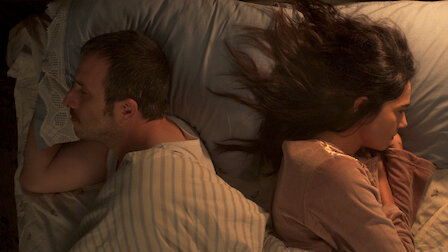
A nubile woman, Meryem, is the central character, who works as a house help in the posh abode of a rich guy busy with girlfriends and other indulgences. He suffers deep loneliness and depression. Meryem’s not-so-posh neighborhood is a stark opposite to her workplace. She lives with her brutish brother (who, I promise, you will dislike deeply) and depressed sister-in-law and their two kids. Their little boy doesn’t speak—obviously because of his mother’s suicidal condition and the overall morbid environment in the house. Meryem is scolded now and then by her ‘holier than thou’ ex-soldier brother—who uses his religiosity as a shield and believes strongly in following to a T all religious dictates he has access to. He wouldn’t try to know the cause of his wife’s depression and chooses instead to reprimand her for not praying in the direction of Mecca. He blames her for driving him mad. He looks like he needs psychotherapy more than anyone else on the show, but some form of madness emanates from all the characters in the story. Meryem’s family has a religious teacher called Hodga or Hoca (which means ‘teacher,’ a religious teacher in Islam), whose permission is important to be sought even when one is seeing a psychiatrist, for instance. Hoca and his family are also depicted as going through their personal crisis. Their lives, especially that of their adopted daughter, Hayrünnisa, are clearly repressed. The young girl takes her hijab off in her parents’ absence and puts the headphones on.
There is a sense of claustrophobia emanating from these homes and moving inconspicuously into the world of the rich and vice-versa. Repression and depression are so rampant that even Meryem’s therapist sees a therapist.
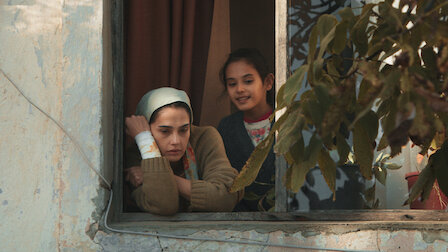
There are so many important characters in Ethos that this space is not adequate to discuss, but I am sure you have by now an idea of what the show feels like with its different storylines.
You need almost six hours to finish the entire series and I don’t regret investing this time in experiencing this narration. Here are some of my conclusions/observations after watching Ethos:
* Berkun Oya’s commentary on Turkey’s men and women, like all narratives, is not fully equipped to tell me everything about Turkish culture and people. It does a good job of giving me relevant glimpses of Turkish life, but too much expectation from one show is pointless. I need to see what else I can access living here in India.
*Ethos bears some amazing characterization, acting, costume design, and cinematography. I would recommend the show for these gems—if for nothing else.
*Depression is not Turkish. Suffering is part and parcel of human life universally. So, thematically, the show is relevant from the human point of view and can be watched by anyone who is not even remotely interested in Turkish culture.
*Stereotyping and pigeonholing are such universal pains in the neck. Nobody seems to have a remedy.
*Formal education is not enough. It cannot be until we have our humanity and moral framework in place.
*Patriarchy is surely a big problem in most parts of the world, but only educating women doesn’t seem to be working as well as expected. Most men in Ethos are both oppressed and oppressive. Educated working women appear to be struggling even more than their rural counterparts.
*Money doesn’t vaccinate one against sadness. Nor does education.
Pictures via https://www.netflix.com/in/title/81106900
 Ambika Singh,PhD
Filthy rich to dirt poor! now that’s what we call a hyperbole
Ofc there are two different societies one richer and wealthier than the other. However, there is an extensive emphasis on the urban and the rural milieu rather than “filthy rich and dirt poor”.
LikeLike
Filthy rich to dirt poor! now that’s what we call a hyperbole
Ofc there are two different societies one richer and wealthier than the other. However, there is an extensive emphasis on the urban and the rural milieu rather than “filthy rich and dirt poor”.
LikeLike
Filthy rich to dirt poor! now that’s what we call a hyperbole
Ofc there are two different societies one richer and wealthier than the other. However, there is an extensive emphasis on the urban and the rural milieu rather than “filthy rich and dirt poor”.
LikeLike