

My Pandemic Woes . . .
During the first wave of the Covid19 pandemic in India, my husband and I contracted the infection. While he recovered quickly, my body got stuck in a sort of limbo for many months to follow. I couldn’t stop coughing—my chest was on the verge of exploding every moment of the day despite the routine treatment prescribed by the doctor we were consulting online. My HRCT results also didn’t look very promising. To control the situation, my doctor finally had to put me on a week-long steroid course, which did get the coughing situation under control.
I thought the worst was over but I also simultaneously felt a lack of health and vivacity in my life. I was constantly low and drained. Little did I realize that it was just the beginning of a downward health spiral for me. I wasn’t coughing anymore but was frequently breathless. I would jump out of the bed at night with an abnormal heartbeat, which sometimes was in the 140s.
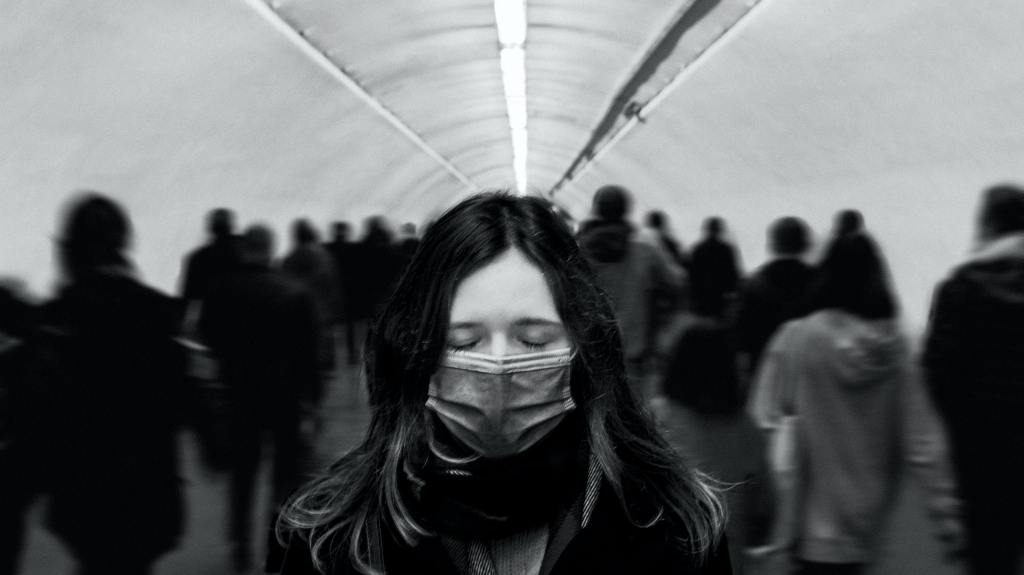
Twice I had to be rushed to the ER—only to be sent back with some sleep medication to ease my anxiety. They called it stress-induced tachycardia. I was at a loose end and was becoming increasingly wary of doctors and hospitals. It felt like they wanted to put me on psychiatric drugs and be done with me. If I told anyone what I was going through, I received a protracted lecture on reducing stress, working less, etc. It was almost like I was to be blamed for my situation and there were no external forces involved in the process.
I became stubborn and refused to speak about my condition with anyone at all. Things didn’t improve despite me staying away from doctors. The sly hypochondriac that lives inside of me told me my labs would show “cancer” with a capital “C” if I dared to see a doctor.
Thanks to my husband’s practical approach to tackling this situation. He has known me since childhood and knows well the antidote to my ingrained pig-headedness in such matters. He ganged up on me, joining hands with my parents and the mighty gang refused to give up until I agreed to have full body investigations done. The labs revealed a thyroid imbalance: my TSH was 26, which should ideally be between 0 to 3. I was deficient in vitamins D and B, iron, calcium, and whatnot! My blood report also showed elevated levels of inflammation. The ECG showed abnormalities because of the high heartbeat.
More labs were ordered to check my body for autoimmunity. The results showed I suffered from Hashimoto’s thyroiditis, an autoimmune form of thyroid imbalance in which one’s thyroid gland is attacked by the body itself. Wow! So, nobody but my own body was the culprit here.
I shouldn’t have been surprised though: my mother suffers the same disease but she must have had hers triggered when she was in her fifties. And as far as I remember from that time when hers was triggered, she wasn’t as miserable. Here I was, in my early thirties sentenced to take thyroid medication every day—for the rest of my life.
Now, let me tell you one thing: the web is full of doctors and health influencers refuting this “life sentence.” They offer a wide range of alternatives from giving up gluten to doing pranayama to not eating sugar in any form. I am a curious cookie and I read/watch/listen to everything there is when I am looking for a solution but I didn’t find the solutions offered to be very practical, excepting of course the ones that endorsed general healthy eating and staying active.
There is also an array of contrary claims in the health industry. So, my endo says gluten is not a problem since my gluten allergy test was normal but many health experts and researchers have banished wheat from the kingdom of good health. Many take the moderate approach saying, “gluten is not a villain, but for some, the overconsumption of gluten-containing junk foods can trigger and worsen an inflammatory response.” I am more with the anti-junk moderate approach. I may be wrong. Do we really know who’s 100 percent right?
Also, I may have a very selfish food bias here. I have grown up eating wheat chapatis, and I never feel full or satiated with rice. I do mix other healthy grains with wheat but giving wheat up entirely has always seemed like an impossible option to me. So, I often ransack scientific studies that don’t treat wheat as a villain. It’s a prejudiced investigation, my friends!
It’s been over a year since the diagnosis. I wake up every morning and take my daily dose of thyroid meds. I have to adjust my dosage every 2-3 months since my levels fluctuate a lot. I have been told that’s how it is in Hashimoto’s.
I take walks for exercise; I know I should do more. I take more gadget-free time than I did earlier (I don’t count time spent listening to audiobooks in this). I still am up till late at night but manage to get 8-9 hours of shut-eye. I supplement my body with some basic vitamins such as D and iron as prescribed by my doctors. I still eat my chapatis and spend time reading and writing in the morning instead of meditating. Trust me, I know what calms my mind.
Most importantly, it’s the chill pill I force myself to take every day. It works; well, most of the time.
Irrespective of my obsession in terms of getting all facts and details right, I am not a medical expert and I don’t know everything. However, I do know that the aftermath of the Covid19 infection has been rather strangely unsettling in my life. I cannot claim to have been the fittest person in the world before the pandemic hit but the plain truth is that my life was medication-free overall and if at all I bore the seeds for this imbalance, at least there was nothing triggering the germination. November 2020 came to alter that fact.
And it’s not only me talking about the probable connection between covid19 and autoimmunity. You only need to look for scientific studies to get an idea about the long-term ill-effects of this infection. Here is my nerdy little supply for you:
https://www.nih.gov/news-events/nih-research-matters/autoimmune-response-found-many-covid-19
https://www.frontiersin.org/articles/10.3389/fmolb.2022.804109/full
https://onlinelibrary.wiley.com/doi/10.1111/imm.13443
https://www.ncbi.nlm.nih.gov/pmc/articles/PMC8135350/
https://www.sciencedirect.com/science/article/pii/S2214624521000174
 Ambika Singh,PhD